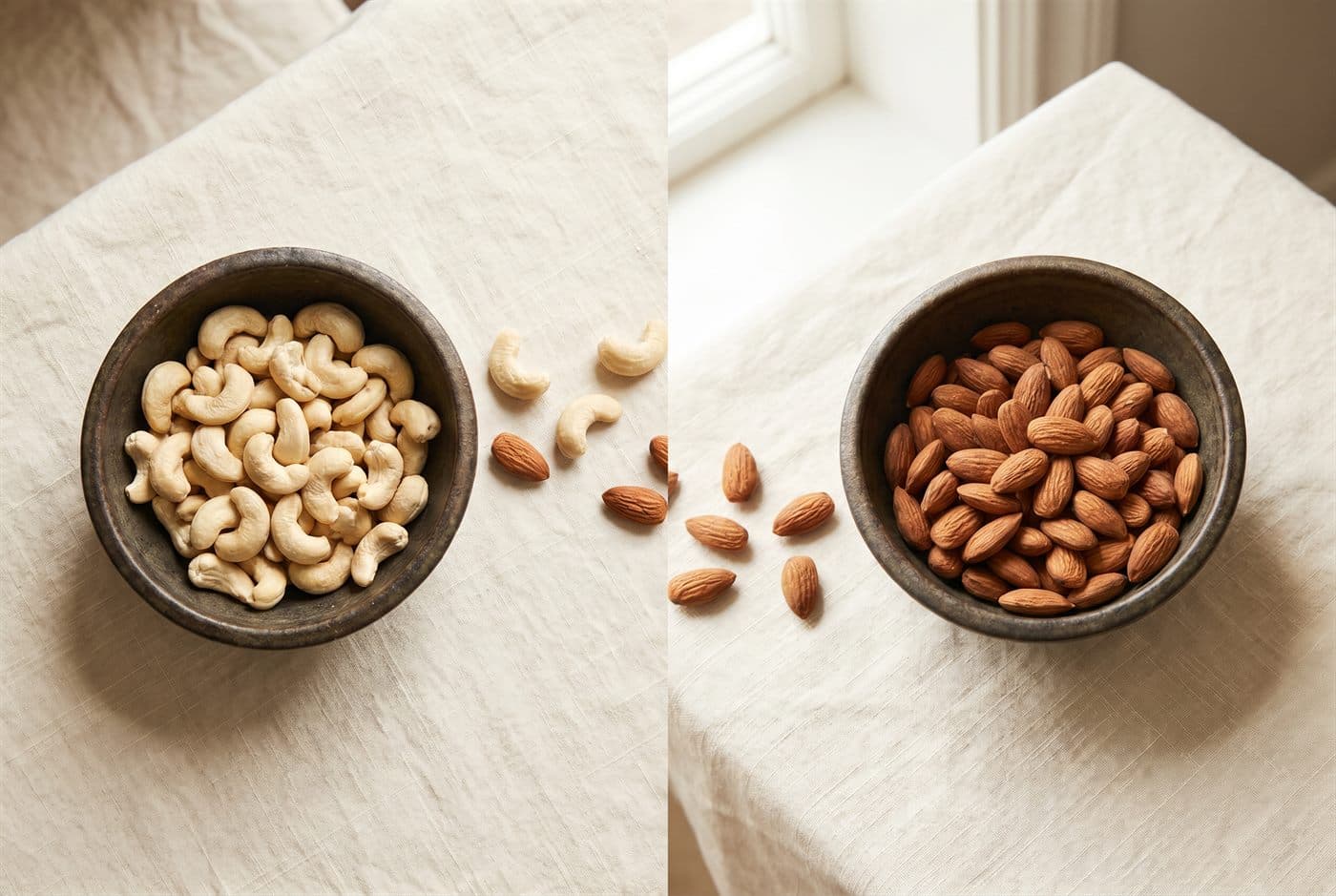
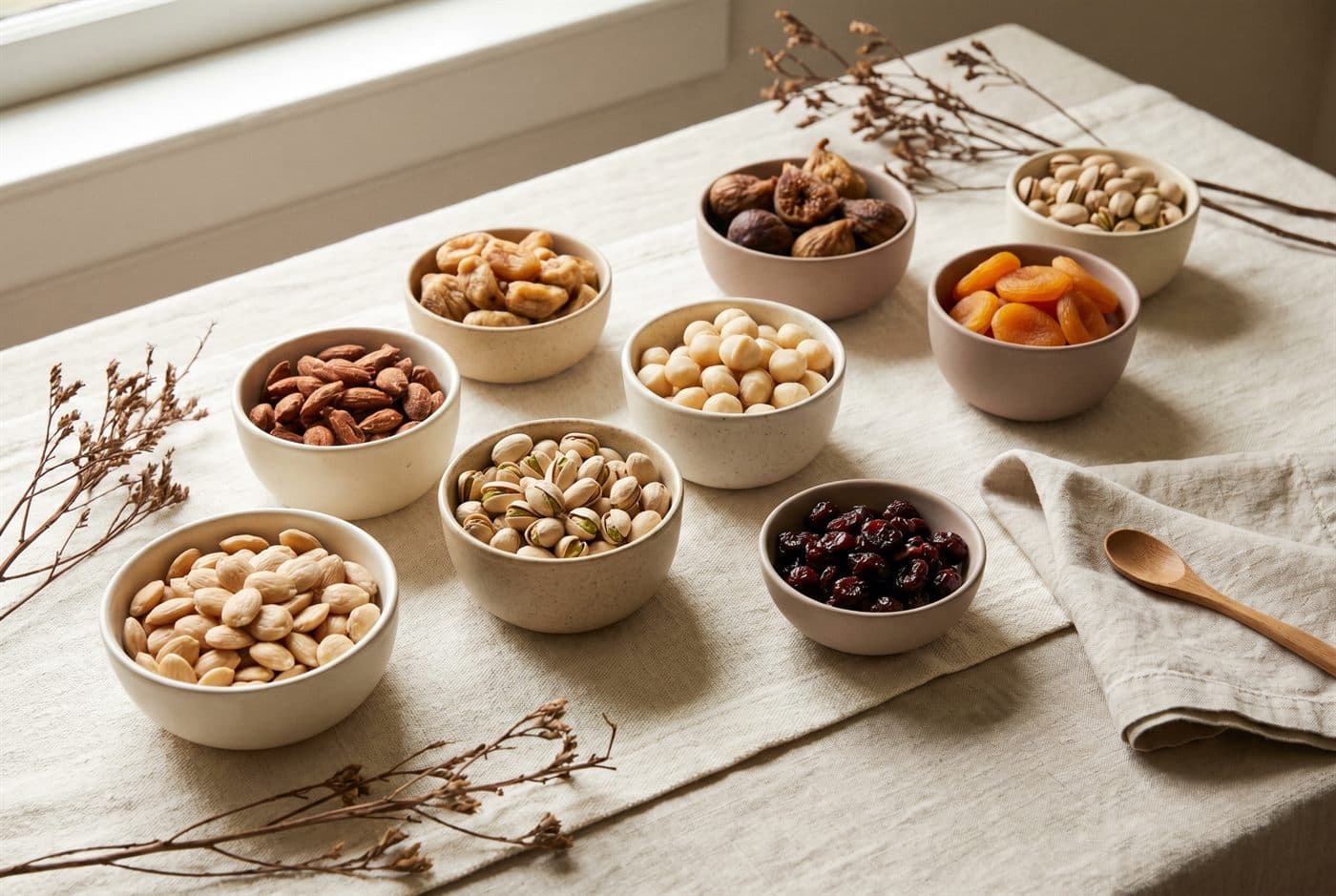
Health Benefits of Dry Fruits & Nuts (Backed by Nutrition)
Quick answer
Dry fruits and nuts are nutrient-dense sources of healthy fats, plant protein, fibre, vitamins and minerals — eaten in moderation (a small handful a day) they support heart health, energy, brain function, bones and immunity.
key takeaways
- A small daily handful (~28–30g) is enough to see real benefits.
- Each nut has a superpower: walnuts for brain, almonds for skin, cashews for energy, dates for iron.
- Soaking overnight improves digestion and nutrient absorption.
- Freshness and 'no preservatives' matter as much as the type of nut.
Nuts and dry fruits are among the most concentrated natural sources of nutrition you can eat. A small daily portion delivers benefits that show up over weeks and months.
Which dry fruit does what
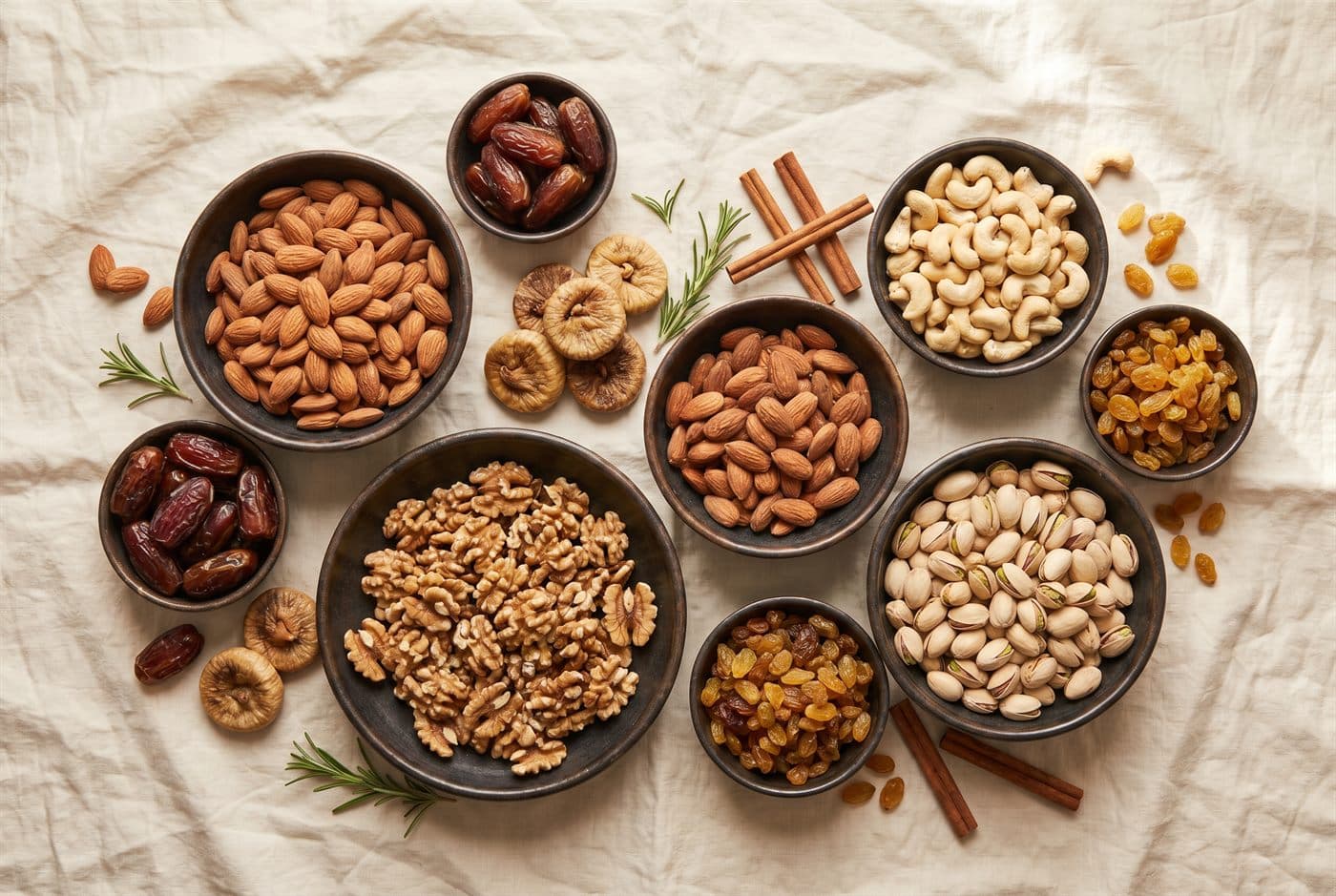
Different nuts and dry fruits carry different strengths. Here's a quick map of what to eat and roughly how much per day.
| Nut / dry fruit | Key benefit | Daily amount |
|---|---|---|
| Almonds (badam) | Vitamin E, skin, heart | 4–6 |
| Walnuts (akhrot) | Omega-3, brain & memory | 2–4 halves |
| Cashews (kaju) | Iron, magnesium, energy | 4–6 |
| Pistachios (pista) | Protein, eye health | ~28–30 |
| Dates (khajoor) | Natural energy, iron | 1–2 |
| Raisins (kishmish) | Iron, digestion | 1 tbsp |
Top benefits
- •Heart health: almonds, walnuts and cashews are rich in monounsaturated fats that support healthy cholesterol.
- •Brain & memory: walnuts (akhrot) are high in omega-3 (ALA).
- •Energy & iron: dates (khajoor), raisins (kishmish) and cashews give quick, natural energy.
- •Bones: figs (anjeer) and almonds provide calcium and magnesium.
- •Immunity & skin: vitamin E from almonds and antioxidants from berries.
How much per day?
A balanced daily mix: 4–6 almonds, 4–6 cashews, 2 walnut halves, a few raisins and 1–2 dates. Soaking overnight can improve digestion and nutrient absorption.
People also ask
The questions readers most often ask about health benefits of dry fruits & nuts.
Freshly packed nuts & dry fruits 🥜
Shop now