Chilgoza (Pine Nuts): Benefits, Price & Why It's So Expensive
Quick answer
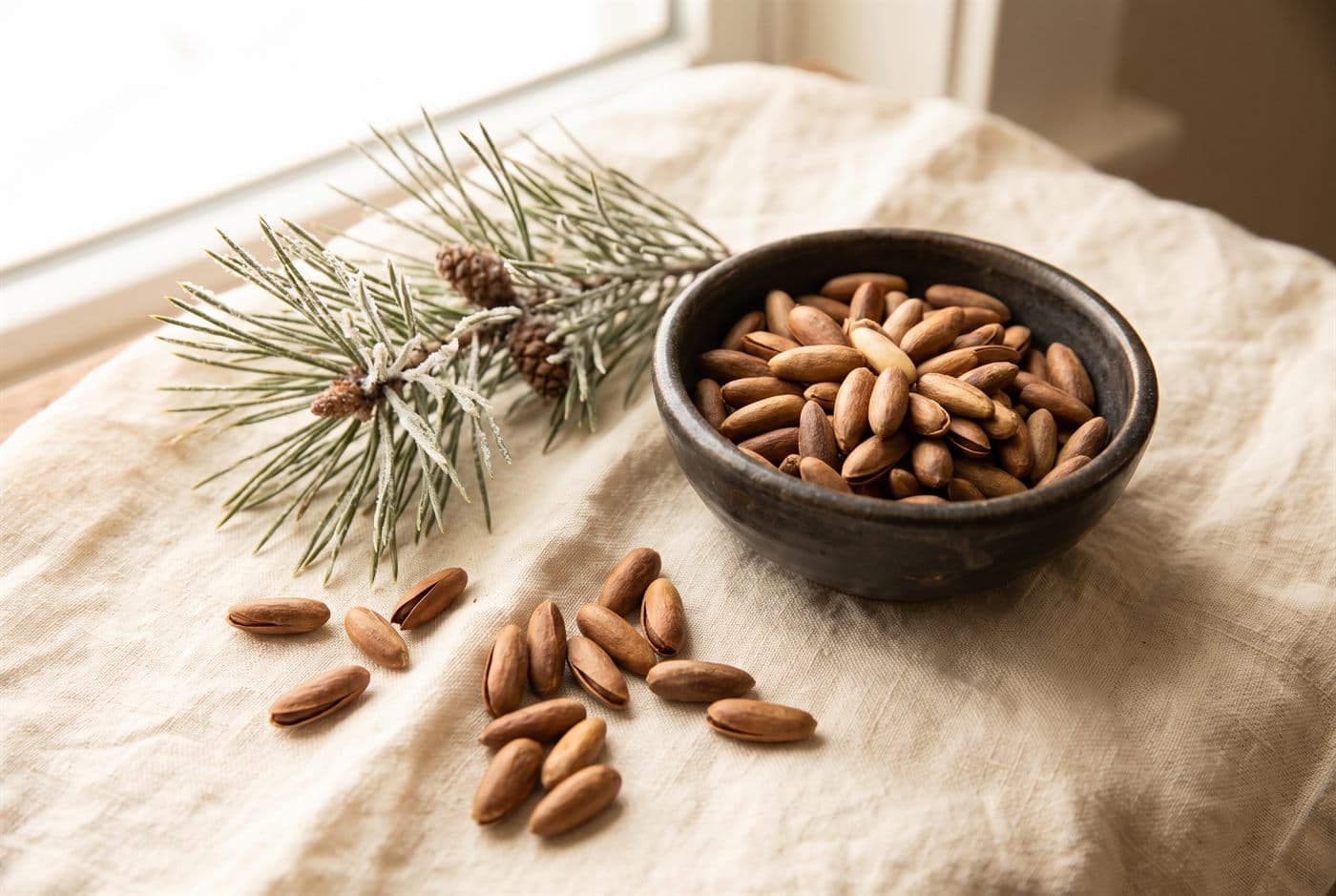
Chilgoza (pine nuts) are rare Himalayan kernels rich in healthy fats, protein, iron, magnesium and zinc. They support heart health, energy, brain function and winter immunity. Because the pine trees grow wild in limited Himalayan regions and yield tiny harvests, chilgoza costs ₹3,000–₹6,000 per kg — India's most premium everyday dry fruit.
key takeaways
- Chilgoza = pine nuts in English; grown wild in Himalayan regions (Kinnaur, Gilgit).
- Rich in iron, magnesium, zinc and pinolenic acid (appetite control).
- A winter classic — traditionally eaten for warmth and energy.
- Expect ₹3,000–₹6,000/kg; very cheap 'chilgoza' is usually old or fake stock.
Chilgoza is the caviar of Indian dry fruits — tiny ivory kernels from wild Himalayan pines, harvested once a year by hand. Here's why it commands its price, and what it does for you.
Health benefits of chilgoza
- •Heart health — pinolenic acid and monounsaturated fats support cholesterol.
- •Energy & warmth — dense calories make it the classic winter nut.
- •Brain & nerves — magnesium, zinc and iron in concentrated form.
- •Appetite control — pinolenic acid is linked to natural satiety hormones.
- •Skin & immunity — vitamin E and antioxidants.
Why is chilgoza so expensive?
Chilgoza pines grow wild — they cannot be farm-cultivated at scale. Cones are hand-harvested in remote Himalayan valleys (Kinnaur in India, Gilgit-Baltistan), each cone yields only a few dozen nuts, and shelling is manual. Tiny supply + rising demand = ₹3,000–₹6,000 per kg.
How much and how to eat
10–15 kernels a day is plenty. Eat them raw as-is, lightly toasted, or crack the thin brown shells by hand in the traditional winter style. Store airtight in the fridge — their delicate oils spoil faster than other nuts.
People also ask
The questions readers most often ask about chilgoza.
Freshly packed nuts & dry fruits 🥜
Shop now